Taking a Vacation From Weekday Breakfast

•November 23, 2009 • Leave a Comment

On vacation in Virginia earlier this Autumn, we stayed at a very nice resort with a full kitchen. Vacationing with a full kitchen, equipped with a garbage disposal and a dishwasher, is a MUST for anyone who loves to cook.

Vacation brings out the leisurely breakfast eater in me… and my Family. During the week, there is such a hustle and bustle to get out of the door and get to work that each minute carries a high premium. There is no time for lingering at the breakfast table and hardly enough time to eat a bowl of cereal. Grab coffee, snatch toast from oven, and make a mad dash out of the door while trying to remember if you have your keys, purse, and phone. However, on vacation, all of that seems like a lifetime away.

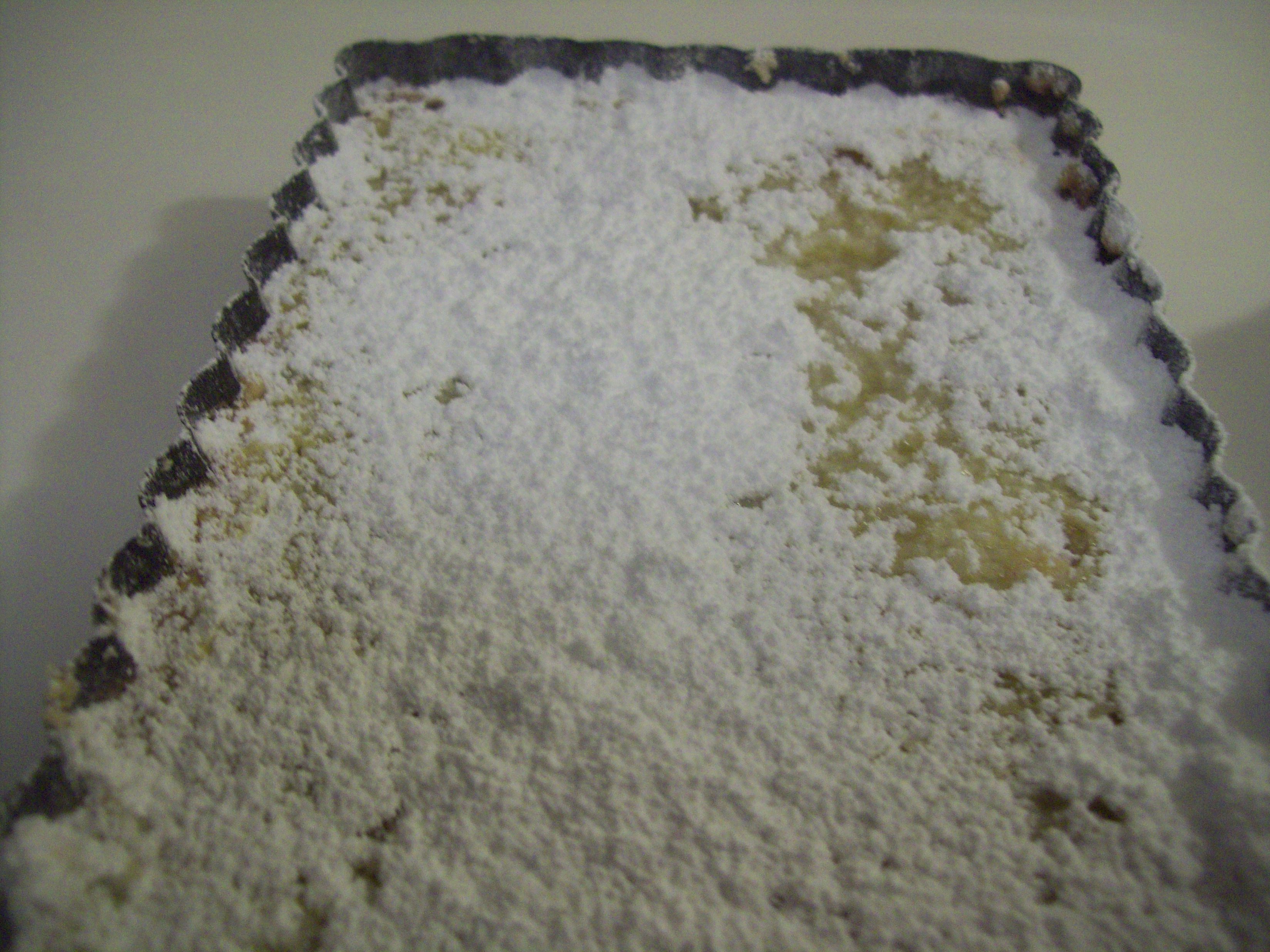
On vacation, there is time for Almond-Crusted Challah French Toast with real Maple Syrup. Not only is there time to make it… but also there is time to sit and enjoy it with Family. French Toast made with Challah bread is more decadent that regular bread. Allowed to dry out over night, slices of Challah bread will soak up the egg-milk custard just nicely rendering a crisp exterior and a tender, delicate interior.

My Recipe: ALMOND-CRUSTED CHALLAH FRENCH TOAST serves 4

1 med loaf Challah Bread
6 large eggs, beaten
1 ½ c unsweetened soymilk, almond milk, rice milk, or dairy milk
1 t pure vanilla extract
½ t cinnamon
½ t kosher salt
2 c sliced almonds
Unsalted Butter, as needed
Warm Maple Syrup, as needed
Powdered sugar, optional

My Method:

Starting the night before, cut the loaf of Challah bread in half and cut four 1” thick slices from each halve starting from the middle of the loaf; freeze the end pieces and reserve for another use (suggestion: individual bread puddings)

Lay the slices out on plate on the counter to dry out; this will help the bread absorb the soaking liquid much better

The morning of, preheat oven to 200-degrees; set up a sheet pan with a oven rack on top, set in oven

Meanwhile, in a shallow dish combine beaten eggs, unsweetened soymilk, vanilla extract, cinnamon, and kosher salt to make an egg-custard

On a plate, sprinkle almonds slices in a thin layer

Heat a large skillet over medium heat; melt 1 T of unsalted butter in the pan, swirling to cover the entire bottom of the pan

Once butter is melted, dip two slices of Challah bread into the egg-milk mixture covering both sides; lay slices into the almond slices; and then into the skillet, almond side down

Cook for 4 – 6 minutes, until almonds are toasted; using a wide spatula, flip and cook other side for another 3 – 5 minutes

Transfer the slices to the rack in the oven to remain warm while cooking the remaining six slices, using unsalted butter as needed

Serve Almond-Crusted Challah French Toast w Warm Maple Syrup and Powdered Sugar, if desired

Since this is vacation and time is not of the essence, why not prepare some black-pepper bacon and soft scrambled eggs to serve alongside the French Toast.

For Black Pepper Bacon: Preheat oven to 400-degrees; lay thick bacon slices on a sheet pan and sprinkle liberally with fresh cracked medium-grind black pepper; cook in oven until crispy, about 12 – 14 minutes. Remove bacon from oven, transfer to paper towel lined plate. Reduce oven to 200-degrees and start preparing French Toast. Bacon can remain warm in the 200-degree oven while cooking the French Toast.

always in good T.A.S.T.E – cause you gottatastethis!

One Basic Method with So Many Delicious Possibilities

•November 7, 2009 • Leave a Comment

Risotto is the ultimate one-pot, simple, and fast meal. Everything cooks in one pot; a cook can create as many versions as they want; and it can be impressive for a dinner party and comforting for a family meal. Once you master the basic method, risotto is never more than 20 minutes away from start to finish.

Originating in the northern section of Italy, risotto starts with round short/medium-grain white rice with high starch content. Carnaroli and Arborio are two most popular in the United States though there are other varieties in Italy. This type of rice has the ability to absorb liquid, remain “al dente” (firm to the tooth), and release enough starch to bind the grains together in a creamy sauce. Long-grain rice will never do.

The basic method for making risotto does not change. While there, are some recipes and boxed “risotto,” mixes that offer no-stirring risottos, these recipes make a nice rice dish; but they do not produce a traditional risotto. Stirring makes a good risotto. Stirring helps to agitate the rice in the stock to release the rice’s starch, which is key to giving the dish it’s characteristic creaminess. The chances are great that the recipes and the box-mixes rely of thickeners that are not in a traditional risotto: cream, modified cornstarch, rice powder, and/or lecithin. So skip all of that and just follow the basic method.

Basic Method:
• sauté aromatics in olive oil and butter
• add rice, coat in oil, butter and aromatics
• add wine, reduce until completely absorbed
• ladle in hot stock (chicken, vegetable, or seafood) one cup at a time
• remove from heat just as last cup of stock is being absorbed
• add additional butter and Parmigiano Reggiano, stirring to help create the “creamy” sauce
• serve immediately

At it’s best, risotto is thick and creamy yet still loose and saucy with each rice grain cooked separately. The rice should be firm to the tooth and still soft but never mushy. The best results began with the best ingredients, so make sure to buy a wedge of Parmigiano Reggiano and not the pre-shredded or grated stuff. If you don’t have homemade chicken or vegatable stock, which is always better, buy quality low sodium bouillon cubes and reconstitute the amount needed with a sprig of fresh herbs and a bay leaf.

Heavy cream, mascarpone, or cream cheese has no place in a risotto. Combined with the starch from the rice, these will make the risotto heavy and dull the favors that you have worked to build. The creaminess will come from stirring the rice during cooking, maintained and smoothed out with the addition of the cheese and butter. The other rule of thumb is that if the risotto contains seafood than it should not contain cheese as Italian cuisine dictates that cheese offends the taste and smell of seafood.

My Recipe: SWISS CHARD and SUNDRIED TOMATO RISOTTO serves 4 generously

1 c Caranoli or Arborio rice
2 T olive oil
4 T butter, cut into small cubes and divided
1 small onion, finely diced
1 garlic clove, finely minced (optional)
½ c white wine
3 c hot stock (chicken or vegetable), more if necessary
1 c shredded Parmigiano Reggiano or Grana Pandano
½ c sundried tomatoes, chopped
2 – 3 c swiss chard, washed and dried
kosher salt, to taste
cracked black pepper, to taste

My Method:

Place stock in a saucepan; bring to a boil; and lower to a simmer

Remove the greens from the white stalk of the swiss chard; cut stalk into medium dice and set aside; roughly shred the greens and set aside

Photo Bin 109Photo Bin 110Photo Bin 107

Heat a large sauté pan or deep skillet over medium-high heat; add olive oil and 2 T of cubed butter; sauté onion and garlic until onion becomes translucent without browning; add diced white stalk of the swiss chard and cook for another minute

Add rice; stir until all grains are coated in the oil-butter mixture

Add white wine; stir until all of the wine is evaporated; approximately a minute

Add the first ladle, about 1 cup, of hot stock; reduce heat to medium; gently stir constantly until the rice absorbs the stock and the pan is almost dry; repeat process with one more cup of stock

Right after adding the third ladle of hot stock, add the sundried tomato and swiss chard greens to the pan; stirring to fully incorporate into the risotto

Photo Bin 106

Remove pan from stove BEFORE the final ladle of stock completely absorbs; continue stirring; add cold butter cubes slowly and continue stirring; add ¾ c shredded Parmigiano Reggiano and continue stirring to develop the “creamy sauce”

Photo Bin 108

Taste and adjust seasoning, if necessary

Serve immediately with additional Parmigiano Reggiano at the table

Photo Bin 111

Risotto transcends all seasons. Since the method and the base ingredients (rice, wine, stock, butter, olive oil, and Parmigiano Reggiano) are all the same, you can make the dish seasonal by adding seasonal produce. In the winter, make a plain risotto and serve it in place of mashed potatoes with braised meat or roasted chicken. In the spring, add fresh new green peas, artichokes, a mix of sautéed baby vegetables, or fava beans. In the summer, add grilled eggplant, corn, or peppers. In the fall, add roasted cubes of butternut squash or sautéed mushrooms drizzling with truffle oil just after plating (pictured below). Truffle oil is optional though highly encouraged if you love mushrooms.

Photo Bin 104

All meats and seafood work well in risotto…. Though, honestly, I much rather prefer those that highlight a vegetable and I almost always serve it as a main course at home.

always In good T.A.S.T.E – cause you gottatastethis!

Roasted Butternut and Apple Soup… enough said!

•October 19, 2009 • 4 Comments

Here IT is… the most incredible Autumn/Winter soup EVER!

If I could erect a huge 6-foot sculpture of butternut squash in my front yard ever Autumn, I would. There is already an imaginary one erected in my heart, I start collecting the building materials each Spring; I start building each Summer; and, on the very first day of Autumn, I erect my imaginary butternut squash just before I head inside and make the seasons first Butternut Squash Risotto. Butternut Squash Risotto is an institution in my Family. Each Autumn Equinox, we invite people over; I make a huge batch; I lavishly ladle it onto warm plates; I grate decadent amounts of Parmigiano Reggiano on top of each plate; and we tuck in. Ok, so maybe we melt into oblivion; only resurfacing to share a baked fruit crisp afterwards… but I digress! Risotto is not the topic of this blog.

Roasted Butternut Squash and Apple Soup is the topic!

Maybe the biggest draw to this soup is that I only cook butternut squash during the Autumn/Winter months even if I see it in at the market all year round. I believe the best of the crop is available during this time. I have no inclination to eat an inferior, bland tasting vegetable… that more than likely had to travel across the globe to get to your market in the summer time when you can get the best locally grown, superior flavor winter squashes to enjoy during the proper season… and neither should you. (Putting my soapbox away – for now!)

Photo Bin 084

Speaking of vegetable, butternut squash classifies as a fruit; much like the eggplant and tomato masquerading as vegetables. It is loaded with fiber, beta-carotene, potassium, magnesium, and vitamin C. A half-cup serving has less than a tenth of a gram of fat. It is interchangeable in many recipes, sweet or savory, with traditional pie pumpkins. More than 99% of the squash is edible – the flesh, seeds, and peel are edible; though you will need to cook the peel for easier, and albeit, tastier digestion. The seeds and flesh are edible cooked and raw. The only part non-edible is the stringy membrane around the seeds.

Roasting, to me, is the best way to extract every ounce of flavor from the butternut squash. I often start out each preparation roasting it and I always roast more than I need, as the chances are very great, that I am going to need to snack on a scoop or two before I proceed to the next step. Much like Chili and Lime Fried Okra, I can make a complete lunch out of a pan of roasted butternut squash.

My Recipe: ROASTED BUTTERNUT SQUASH & APPLE SOUP serves 6 – 8

1 – 3-4# butternut squash, cut into 6 – 8 large chunks; remove seeds and stringy membrance; but do not peel
1 granny smith apple, core and cut into quarters; but do not peel
1 fuji, gala, or pink lady apple, core and cut into quarters; but do not peel
2 celery stalks, cut in half
2 medium onions, or one large, peel and cut into quarters
6 garlic cloves, peel and separate
3 T olive oil, separate
1 c non-dairy creamer, unsweetened soymilk, heavy cream, or 2% milk
1 quart chicken stock or very rich vegetable stock, more if needed
4 sprigs fresh thyme, separate
1 c cooked small shape pasta: penne, elbows, etc., optional
kosher salt, to taste
cracked black pepper, to taste
apple juice, optional
2 – 3 T granulated sugar, optional

My Method:

Preheat oven to 375

Place cut butternut squash on a roasting pan; toss with 2T olive oil, season with kosher salt, cracked black pepper, and 2 thyme sprigs; roast in oven until butternut squash become soft and caramelized, about 40 – 45 minutes, stirring halfway through roasting

Place apples, celery, onions, and 4 garlic cloves on a separate roasting pan; season with remaining 1T olive oil; kosher salt and cracked black pepper; roast in oven until soft and caramelized, about 25 – 30 minutes, stirring halfway through roasting

Photo Bin 079

After butternut squash is cooked, remove from oven; allow to cool and remove the outside peel; remove and discard whole sprigs of thyme

NOTE: Roasted butternut squash peel perfectly good to eat or snack on and removing it after the squash has roasted is much easier than struggling with a vegetable peeler or knife on the raw squash

Photo Bin 081Photo Bin 080

Working in batches, add half of roasted butternut squash, half of roasted apple-vegetable mixture, half of the stock, and one garlic clove to a blender; puree until smooth; pour into a soup pot

Repeat with remaining roasted fruits and vegetables, stock, and garlic

Add cooked pasta to soup pot, leaves from two thyme sprigs, and non-dairy creamer, soymilk, or dairy counterpart; warm soup over medium heat, stirring to combine

Photo Bin 082

Season with kosher salt, cracked black pepper, to taste; soup should be savory with a slight sweetness from the apple; to achieve the perfect balance, add the granulated sugar one tablespoon as a time, tasting after each addition until you arrive at the right balance; 2T of granulated sugar should do the trick… anything more becomes dessert

If soup is too thick, thin it out with a little apple juice or extra stock; depending on the sweetness level depends on whether you should then with a sweet liquid or a savory liquid

For an elegant and impressive starter, I serve this soup with an apple crisp floating on top with a sprinkle of fresh thyme leaves and a dusting of fresh cracked black pepper.

For a kitschy hor d’ouervres, I serve this soup, without the pasta, as a shooter in a shot glass with an apple crisp balanced on the top of the glass like a lime wedge over a shot of tequila.

For maximum comfort and a “warm hug from the inside out”, I ladle this soup into a deep bowl, grab a hunk of crusty bread, and dive into it all the while thanking the heavens for another season of butternut squash.

Photo Bin 083

always in good T.A.S.T.E – cause you gottatastethis!

Making the case for Dark Meat

•October 13, 2009 • 7 Comments

There is not much new to say about the fascination of white meat chicken. By far, it is the most popular choice when dining out and eating in. It reigns supreme for the snack-set – chicken wings. It is the first choice for the weight conscious – boneless, skinless chicken breast. Even fast food restaurants are on board to attract patrons with “all white meat chicken” and “boneless chicken wings.” All that said, it would not be to far-fetched to find that the pendulum is bound to swing backwards for the love of the dark meat… chicken that is.

Dark meat chicken gets a really bad rap… and for very good reason. It is not as neat, or clean, or bright, as white meat. The color is not attractive; in fact, it looks like dirty white socks that went through the wash cycle without bleach added. On dark meat with the bone, the meat gets darker the closer you go to the bone… and just as you pull away from the bone, your teeth catch that nasty black vein. There is nothing pretty about dark meat.

Dark meat gets is color for the protein that moves oxygen through the body, myoglobin. Since chickens use their legs and thighs, more than their wings, the legs and thighs need more oxygen. More oxygen translates to more myoglobin, which translates to permanently staining dark meat.

However – not all hope is lost, dark meat is redeemable. Dark meat does not dry out as quickly as white meat during many cooking processes. Take roasting, for example. When roasting a whole bird, inevitably every recipe will go to extra lengths to explain how to keep the white meat juicy and succulent. One recipe suggests turning the bird upside down and cooking breast-side down so that the juices stay inside the white meat while cooking. Another involves a very methodical white-meat basting process that keeps the oven door open so much that the total time of cooking increases by 30 minutes. Then there is stuffing herb butters between the skin and the white meat to keep it flavorful and moist while the dark meat just roast to perfection without any extra protection.

The natural fat content in dark meat is higher, but so are the zinc, iron, magnesium, and niacin content. All of these trace minerals are important for cell reproduction, maintaining healthy skin and nails, and they aid in protein absorptions and digestion. Since the biggest culprit of fat in chicken comes from the skin, removing it from the dark meat is just as easy as it is with the white meat. Side by side, skinless dark meat has only 2 grams more fat in it than skinless white meat. Dark meat does not need its skin to protect it from drying out so pulling it off levels the fat playing field to white meat with the skin on.

The best redemption to dark meat, for me, is its ability to withstand a low, slow braise, and emerge from the pot gloriously succulent and decadent where it’s counterpart becomes stringy and dry. With a heavenly sauce that nicely cloaks that dingy color, the case for dark meat chicken is closed…deliciously.

My Recipe: CREOLE SMOTHERED CHICKEN serves 4

4 – chicken thighs, skin removed
4 – chicken legs, skin removed
2 T olive oil
1 green bell pepper, seeded and cut into strips
2 medium yellow onion, peeled and cut into strips
2 celery stalks, sliced
2 garlic cloves, minced
1 sprig thyme
4 T all-purpose flour
1 T kosher salt, more to taste
1 t cracked black pepper, more to taste
1 t cayenne pepper, more to taste
1 T Worcestershire sauce, optional
1 – 15oz can whole tomatoes, drained and crushed by hand
1 ½ c chicken stock, or water

My Method:

Combine kosher salt, cracked black pepper, and cayenne pepper; use half of the spices to season the chicken and use the remaining to season the flour; set aside

Heat a large skillet over medium high heat; add olive oil

Dredge seasoned chicken into the seasoned flour; shaking off excess flour, brown the chicken in the hot olive oil until golden brown on all sides; about 4 minutes on each side; remove from pan

Photo Bin 001

Work in batches to make sure that the chicken browns nicely

After all the chicken in browned, add the onions, peppers, celery, and garlic to the skillet; sauté until the vegetables become fragrant and translucent; about 6 minutes; add hand-crushed tomatoes; combine well

Photo Bin 002

Return chicken to the skillet, nestled into the vegetables; cover with chicken stock, or water; add Worcestershire sauce and sprig of thyme; bring skillet to a boil

Photo Bin 003

Reduce skillet to medium, cover, and simmer until chicken cooks through and sauce thickens; about 20 – 25 minutes; stirring occasionally to prevent sticking

Taste and adjust seasoning, to taste, before serving

Photo Bin 004

Steamed brown rice and steamed okra round out a meal of Creole Smothered Chicken. Make sure to offer plenty of Louisiana-style Hot Sauce at the table… and something cool and sweet to wash it all down.

always in good T.A.S.T.E – cause you gottatastethis!

Warm Hugs from the Inside Out

•October 2, 2009 • 3 Comments

The first soup that was going to post on this blog for autumn was my Roasted Butternut and Apple Soup. It is a brilliant tasting soup, I often get many requests for the recipe, and I even some that asks if I can a ship them a few quarts. However, after a week of eating deliciously simple roasted butternut squash for lunch and celebrating the autumn equinox with a luxurious Butternut Risotto, I got a hankering for a warm, hearty, and comforting bean soup.

(I promise the Roasted Butternut and Apple Soup recipe is coming… soon!)

Truth is I think all soups are comforting. The level of comfort changes with each soup. Sometimes I factor in sentimental memories and if there is, an illness involved. Soups, when done properly, are a big, sincere, comforting hug from the inside out. With a sack of white beans, a bounty of fresh vegetables, and sweet smoky turkey legs, comfort is within reach.

Photo Bin 079

Most bean soups are a quick snap to make in the pressure cooker and the dried beans do not need soaking overnight to get a creamy soup broth and soft, tender beans. The method is basic: sauté aromatics, add beans, add smoked meat (if using), add enough water to cover, and let the pressure cooker do all of the work. If using a pressure cooker scares you, then cook this soup in a large, heavy-bottom Dutch oven soup pot.

My Recipe: WHITE BEAN & VEGETABLE SOUP w SMOKED TURKEY serves 8

12 oz dried white beans: navy, northern, or cannellini, your choice
1 – 3# smoked turkey leg or smoked turkey thigh
1 medium onion, peeled and diced
1 medium leek or two small baby leeks, cleaned well and diced
1 rib celery, diced
2 medium carrots, peeled and diced
1 c frozen spinach, thawed and water squeezed out
2 T olive oil
1 – 2 bay leaves
2 ½ c water; plus more if needed
kosher salt, as needed
cracked black pepper, as needed

My Method:

Heat pressure cooker or the bottom of a heavy-bottom Dutch oven soup pot; add olive oil; add onion and sauté until onions are translucent, about 4 minutes

Add leeks and cook until soften, but not brown, about 4 minutes; add celery and carrots; sauté for another 6 minutes

Photo Bin 080

Add smoked turkey leg, or turkey thigh, white beans, and bay leaves

Cover contents with water and bring pot to a full rolling boil

Follow the instructions for your pressure cooker to secure the lid; reduce heat to medium; and cook under pressure for 30 – 40 minutes

If using a Dutch oven, reduce the pot to a medium-high heat; cook until beans become tender, for about 1 hour and 15 minutes

After beans have softened, remove smoked turkey leg or turkey thigh and set aside to cool; add more water to thin soup if it becomes too thick.

When turkey leg, or thigh, is cool enough to touch, remove and discard skin; using a fork, shred meat from the bone, careful to remove any pin bones before returning meat back to soup pot

Add spinach; season soup with kosher salt and cracked black pepper to taste

Photo Bin 083

This soup is a full meal in a bowl chocked full of vegetables and protein For the ultimate in comfort, serve it with a golden, slightly sweet, crumbly cornbread with diced apples folded into the batter… and think of this as a huge bear hug.

My Recipe: GOLDEN SWEET APPLE CORNBREAD serves 8

1 c all-purpose flour
¾ c cornmeal
½ c granulated sugar
1 T baking powder
¾ t kosher salt
¾ c unsweetened soymilk or dairy milk
½ stick unsalted butter, melted
1 egg
1 large sweet apple, peeled and diced
Non-stick baking spray

My Method:

Preheat oven to 425 degrees; spray 8” square or round baking pan with non-stick baking spray; set aside

In one bowl, combine the flour, cornmeal, granulated sugar, baking powder, and kosher salt

In another bowl, combine the soymilk, or milk, egg, and melted butter; combine thoroughly

Pour wet ingredients into the dry ingredients; combine until just moistened; fold in the diced apples; and pour batter into the prepared baking pan

Bake for 20 – 25 minutes until golden brown or until toothpick inserted into the center comes out clean

Serve while warm with soup

Photo Bin 086
Photo Bin 087

always in good T.A.S.T.E – cause you gottatastethis!

Garden Grazing: Summer Edition – Pt III

•September 21, 2009 • 3 Comments

This week, the plan is to till and turn the soil in the garden in preparation of giving our fall seedlings a place to grow, flourish, and produce tasty vegetables for the entire fall season. It is busy, hands-on work; yet, it is very relaxing and satisfying work to me. Before the excitement of the anticipated autumn bounty gets out of control, I pay homage to the workhorse of my summer garden – the Long Bean.

Long Beans – sometimes called the Asparagus Beans, Chinese Long Bean, and Yard Long Beans – are the most rewarding and productive vegetable I have ever planted…Ever. When I planted four seeds last spring, I anticipated that I would get one plant and that it would produce a goodly amount of beans to throw into a few stir-fries along with other vegetables. Instead, all four quickly sprouted and, after I set them into the garden, they took off like nothing I had ever planted. The plants begin to grow and vine at the speed of a cartoon animation. We set up two three-foot trellises to give it a place to climb. Within days, the plants climbed the trellises and they began zigzagging from one trellis to the other entwining itself onto itself; all the while producing bright green leaves. This vigorous activity completely over shadowed the wax beans and Blue Lake green beans I had planted. These vegetables were no match to the work ethic of the long beans.

Photo Bin 099
A month after setting the long beans into the garden, I decided to cut back the plants because, as they were producing leaves and vines, there was no vegetable production. A week later, the plants were covered in the most delicate white, purple, and lavender flowers.
Photo Bin 098
Three days later, the flowers shriveled, died, and left behind a tiny green sprout about the width of the fingernail on my pinky finger. In just three days, the long bean sprout was now the length of a chopstick and, two days later, the plants draped with long beans. No sooner than I picked the first lot, yielding about 39 beans, the plants produced another set of flowers and more sprouts appeared. And so it was the entire summer, each week, there was a new harvest of long beans to cook.
Photo Bin 032
Photo Bin 097
I would comb the vines each day looking for new long beans; their quick growth required daily picking and gathering. The subtropical/tropical climate in south Florida is an idea-growing environment for the long beans that grow in warm (read HOT) climates of Southeast Asia, Thailand, and Africa, where is a traditional food plant in all countries.

A closer relative to the black-eye pea and cowpea than a green bean, long beans look like a super long green beans and are crispy, chewy, and tender when cooked. I harvest long beans while they are still immature, when they are about 16” long, for the best flavor and texture. Too long on the vine, long beans will become longer and plumper but also tougher, woodier, and inedible. Oriental markets usually have long beans their produce area and you can eat them raw or cooked; pickled, in stir-fries or in soups; and even in omelets. I once ate them in a restaurant, which cost my Mom $27 that she never lets me forget. After growing them, I have no idea why they should cost so much. I spent $1.29 on one packet of seeds and only four of the seeds fed us all summer.

My Recipe: THAI YELLOW CURRY LONG BEANS & PORK serves 4 – 6

1 – 2 lbs of fresh long beans, washed, trimmed, and cut into 2” pieces
½ lb ground pork or fine minced roast pork
1 t finely minced ginger
1 – 2 garlic cloves, finely minced
1 – 2 T Thai yellow curry paste (Mae Ploy is my preferred brand)
2 t sugar
1 c coconut milk
2 T soy sauce
1 t fish sauce (Tiparos is my preferred brand)
3 T peanut, canola, or vegetable oil; not olive oil
1 Thai bird chili, optional
4 – 6 T roasted chopped peanuts, optional
2 – 3 scallions, finely minced
1 – 6 c steamed long grain brown rice

My Method:

Combine yellow curry paste, sugar, coconut milk, and soy sauce until thoroughly combined and smooth; drop in Thai bird chili, if using; set aside

Stir-frying is a quick process. Make sure to have everything prepped and ready to go before you drop the first ingredient into the pan.

Photo Bin 080

Heat a wok or large sauté pan with curved sides over high heat; add 1 T of oil; add garlic and ginger and fry for a minute stirring constantly to avoid burning the garlic

Add minced raw or cooked pork and stir fry for another two minutes or until the raw pork is cooked through; remove pork from the pan and set aside

Photo Bin 087

Return work to high heat and add remaining tablespoons of oil; add long beans and stir-fry long beans until they begin to shrivel about 5 – 7 minutes; remove beans from pan and set aside

Add Thai yellow curry paste – coconut milk mixture to the pan; bring to a boil and allow the mixture to reduce by half; return the pork and the long beans back to the pan; add finely minced green onions and cook for another minute; remove from heat

Photo Bin 083

Remove Thai bird chili; serve over steamed brown rice, garnished with chopped roasted peanuts

Photo Bin 090

My Recipe: HOT-PICKLED MUSTARD LONG BEANS serves 4 – 6

1 – 2 lbs fresh long beans, washed, trimmed, and cut into 2” pieces
2 T vegetable oil
4 T apple cider vinegar
2 T Dijon mustard
1 T whole grain mustard
1 – 2 t sugar
1 medium red onion, sliced very thin
1 T kosher salt, plus additional salt for blanching long beans
1 t cracked black pepper
Water, for boiling

My Method:

Bring large pot of water to a boil; add salt; add long beans; boil for a minute; drain; and rinse under cold water

Heat a sauté pan over medium-high heat; add vegetable oil and red onion; sauté until onions begin to soften, about 2 minutes

Add apple cider vinegar, Dijon mustard, whole grain mustard, and sugar; bring to a boil

Add blanched long beans and cook for a minute; season with kosher salt and cracked black pepper; remove from heat

Serve with simply grilled or broiled steaks, pork chops, or chicken

Photo Bin 091

The faithful production of the long beans makes it somewhat bittersweet for me to remove the plants from my garden; but they have reached the end of their growing cycle. The vine and leaf production has slowed down considerably and those delicate flowers heralding in new long beans are fewer and fewer each morning. The long beans are growing slower as well. I am letting a few of the beans go as long as they can on the vine, getting thicker and dried out on the outside while the bean inside becomes very plump. I will shell these beans, allow them to naturally dry out, and use them for next year.

Photo Bin 095

Next year, we plan to put the plants at the base of our larger garden trellis that is over six feet tall. The vines will undoubtedly cover the entire trellis, covering it in pretty flowers, and long beans will hang over our heads before filling our stomachs.

always in good T.A.S.T.E – cause you gottatastethis!

Press Fast Forward to Fall…not so fast.

•September 1, 2009 • Leave a Comment

Somewhere near the end of each season, I start to grow tired of the season’s food and crave the foods of the upcoming season. Therefore, while my garden is still producing okra, eggplant, green beans, and fragrant opal and Genovese basils, I am ready for slow cooked, hearty meats in rich, flavorful sauce on top of creamy fluffy starches and paired with a “stand-up” green vegetable. For the end of summer and start of fall meal, I decided to blend the two seasons for an incredible meal of Pork Chops in Pipérade Sauce, Roasted Garlic Mashed Boniato, and Brazilian-style Collard Greens.

First is the Pork Chops in Pipérade Sauce. Pipérade is actually a dish from the Basque region, which is where the northeastern area of Spain and southwestern area France meet. A quick braise of peppers, onions, garlic, tomatoes and parsley in olive oil can be a side dish alone. Photo Bin 076 For my Pipérade sauce, I like to throw in some capers, white wine, and smoked paprika. This sauce is based largely on peppers, which are summer ingredients; but, they come together to provide a heartiness that can easily fulfill the need for fall cooking. In this recipe, I use three colors of bell pepper – red, yellow, and orange – this is makes the dish pretty and it could be expensive depending on your grocer. The three colors are not necessary to the success of the dish; red and green peppers are traditional to Pipérade.

I chose the pork chop as a nod to the summer season. No one wants to cook a large piece of meat during the summer because that will heat the whole house and in south Florida, we are trying to keep the house cool. Pork chops cook quickly and a thicker cut chop is just hearty enough to hold up with this sauce.

My Recipe: SEARED PORK CHOPS IN PIPÉRADE SAUCE

4 center cut pork chops, 1” thick
2 c chunky tomato sauce or chunky homemade tomato marinara sauce
½ c crisp white wine, or more chicken stock
½ red bell pepper, julienne cut
½ yellow bell pepper, julienne cut
½ orange bell pepper, julienne cut
1 medium onion, julienne cut
2 – 3 cloves garlic, finely minced
2 T capers
1 t smoked paprika
2 T olive oil
2 T flat-leaf parsley, finely chopped
kosher salt, to taste
fresh cracked black pepper, to taste

MY METHOD

Season pork chops with kosher salt, fresh cracked black pepper, and one Tablespoon of olive oil

Heat a large sauté pan over medium-high heat; sear pork chops or each side for about 4 – 6 minutes until handsomely browned; remove from pan and set aside

Add remaining olive oil to the pan and sauté peppers for about 2 minutes; when they begin to soften, add onions and sauté for another 2 minutes; add capers, minced garlic, and smoked paprika; cook for another 3 minutes

Photo Bin 190

Add white wine to pan, scraping up the browned bits from the bottom of the pan; cook until wine is reduced by half; add chunky tomato sauce; bring to a boil and cook for 8 minutes

Return seared pork chops to the pan; return pan to a boil; reduce heat to low and simmer until chops are cooked through; about 10 minutes

Photo Bin 194

Taste and season with kosher salt and cracked black pepper to taste

Serve with a sprinkling of fresh chopped flat-leaf parsley to garnish

Photo Bin 198

In south Florida, we have the pleasure of getting a variety of tropical tubers that give standard potatoes and sweet potatoes a run for the money in flavor. One of my favorites is boniato. In south Florida, we sometimes call boniato the Cuban sweet potato and it is available all year round. Photo Bin 074 It is slightly sweet, not as sweet as a traditional sweet potato, and it has a creamy, rich starchy texture. While peeling them, it is important to drop them immediately into cold water, as boniato oxidizes, or turns brown, very quickly.
Photo Bin 191
Roasted garlic provides such great flavor and compliments the boniato so brilliantly. Both are sweet and savory… and addictively delicious.

My Recipe: ROASTED GARLIC MASHED BONIATO

2 # boniato
1 c unsweetened soymilk, or dairy milk
2 T unsalted butter
2 T olive oil
1 head garlic
olive oil, to drizzle over garlic
kosher salt, to taste
fresh cracked black pepper, to taste
water, to boil boniato

MY METHOD

Heat oven to 400 degrees

Cut the top off the head of garlic, leaving the root end intact; place in foil; drizzle with olive oil; wrap tightly in foil; and roast in oven until soft, about 30 – 40 minutes

Meanwhile, peeled boniato and cut into 2” chunks, immediately dropping the peeled pieces into enough water to cover them

Transfer peeled boniato to a medium sauce pan; cover with fresh water; bring to a boil; and cook until boniato is fork tender, about 20 minutes

Drain cooked boniato, reserving some of the cooking liquid, and return to saucepan; add soymilk, unsalted butter, olive oil, and roasted garlic; heat pot over low heat to bring soymilk to a simmer

Remove the pan from the heat; using a potato masher, mash boniato until creamy, using a little of the reserved cooking liquid to thin out the mixture if it is too thick

Taste and season with kosher salt and fresh cracked black pepper, to taste

Keep warm until ready to serve

Collard greens are a great “stand-up” green vegetable. Not only can they grow and thrive in drastically different temperatures; they are available all year round. I grew up eating collard greens braised low and slow with smoked pork or smoked turkey in the southern tradition. They emerged from the pot a deep green olive color, tender and succulent.

In Brazil, cooks prepare collard greens in a drastically different manner. Brazilian-style collard greens, called couve a mineira, emerge from the sauté pan vibrantly green, crisp, and succulent, with a heady perfume of garlic.

My Recipe: BRIAZILIAN-STYLE COLLARD GREENS (Couve a Mineira)

4 – 5 bunches of collard greens, thoroughly washed
2 T unsalted butter
2 T olive oil
4 garlic cloves, finely minced
kosher salt, to taste
fresh cracked black pepper, to taste
red pepper flakes, to taste (optional)

MY METHOD

Remove the tough central stem from each collard leaf; lay 6 – 8 leaves on top of each other; roll tightly like a cigar; and thinly slice

Photo Bin 077Photo Bin 189

Continue chopping all of the collard greens into thin shreds

Photo Bin 195Photo Bin 196

Heat a large sauté pan over medium-high heat; add olive oil and butter; once butter has melted, add red pepper flakes, if using, and cook until fragrant, about 20 seconds

Add minced garlic; cook until fragrant, stirring constantly so that the garlic does not burn, about 30 seconds

Add shredded collard greens to hot pan; stirring constantly, cook until collards just begin to wilt and soften, about 6 minutes

Taste and season with kosher salt and fresh cracked black pepper, to taste

Keep warm until ready to serve

Photo Bin 199

A good thing about each one of these dishes is that while they are bridging the seasonal eating gap, they can also slide right into the fall season without much hesitation. The Pipérade sauce can compliment a pork roast or a roasted chicken; both proteins are more suitable for fall cooking. The Roasted Garlic Boniato can go unchanged as it serves as a side dish for a beef roast, or Portuguese pot roast, or a braised chicken.
Photo Bin 202

The collard greens can easily stand their ground in a slow southern-style braise or you can add them to hearty, warming bean soups that can nourish as well as warm us through the fall and the winter.

always in good T.A.S.T.E – cause you gottatastethis!

Garden Grazing: Summer Edition – Pt II

•August 23, 2009 • 6 Comments

I had been plotting and planning on what to do with eggplant since we planted it earlier this spring. I wanted to make incredible eggplant parmesan… thin slices of eggplant, breaded, pan fried, topped with homemade marinara sauce, sprinkled with Parmigiano Reggiano.

Photo Bin 069Photo Bin 070

I managed to throw a monkeywrench in my own plans months earlier. Picture it… North Miami Beach, Florida the winter of 2008, we stopped into Bamboo Garden Chinese Restaurant for lunch. (Yes! I have been watching the Golden Girls marathon on WE Network.) This is one of my favorite Chinese restaurants in south Florida. I ordered the Garlic Eggplant as this is the only place in south Florida that makes this dish and makes it wonderfully… tender sweet Asian eggplant stir-fried with water chestnuts, red bell peppers, and green onions in a garlicky, spicy, and slightly sweet Hoisin or Oyster Sauce*. This dish is perfect… melting eggplant, crispy water chestnuts, crunchy red bell peppers, piquant green onions, and the silky sauce.

I offer some of the Garlic Eggplant to the SFW as she almost always orders Honey Garlic Chicken at every Chinese restaurant. She refuses to try the eggplant. I persist… because while she likes ordering the same boring little battered and fried pieces of chicken tossed in honey sauce, I want her to try something different – a vegetable, well really a fruit since botanically speaking eggplant is actually a berry. Months before she refused to try it; however, that winter day in 2008, she said yes. While she fell in love with the flavors, I had unknowingly sabotaged myself.

Photo Bin 071

Now every time there is a mention of eggplant in the house, a discussion on Hoisin sauce follows soon after. Seeing as planting eggplant was not my initial idea, I conceded…. but wait until the next harvest.

My Recipe: GARLICKY EGGPLANT IN HOISIN SAUCE

2 # eggplant, medium size, Asian eggplant works excellent in this recipe
4 – 6 garlic cloves, sliced thinly
1 t fresh ginger, grated very finely
¼ c Hoisin Sauce
⅛ c water
2 T soy sauce
1 T sugar
1 T sesame oil
1 t red pepper flakes
¼ t ground white pepper (optional)
⅛ c vegetable oil
sesame seeds, for garnish

My Method:

Wash eggplant and cut lengthwise into for sections; cut each section on the bias about ½ “ in thickness; set aside

Combine the following: grated ginger, Hoisin sauce, water, soy sauce, sugar, sesame oil, red pepper flakes, and ground white pepper, if using; mix well; set aside

Photo Bin 074

Stir-frying is a quick process. Make sure to have everything prepped and ready to go before you drop the first ingredient into the pan.

Heat a wok of large sauté pan with curved sides over high heat; add ½ amount of vegetable oil; stir-fry half of the eggplant pieces until lightly brown on all sides; remove with a slotted spoon and reserve before cooking the remaining eggplant using the remaining vegetable oil

Photo Bin 073

After all eggplant is brown, remove all but 1 T of vegetable oil from pan; add sliced garlic and stir-fry until golden brown and fragrant; stirring constantly to avoid burning the garlic; about 2 – 3 minutes

If the garlic burns, throw the garlic out, wash the pan, and start again with fresh garlic and oil

After the garlic is lightly browned, add the sauce mixture to the hot pan stirring continuously; add the browned eggplant and cook for about 6 minutes until eggplant is well coated and sauce thickens

Remove from heat; serve immediately garnished with sesame seeds.

Photo Bin 076

I served this version of garlicky eggplant as a part of a meal of small Asian inspired plates including Chicken with Apricots, Chinese Long Beans, and steamed brown Basmati rice. If I were serving it alone with just steamed brown rice, I would include red bell pepper and scallions during the garlic browning stage and back to the pan with the sauce. These additions round out the dish and makes it more substantial on it’s own.

*For a completely vegetarian dish, use only Hoisin sauce which typically does not contain any animal products.

always in good T.A.S.T.E – cause you gottatastethis!

Guess Who Came for Dinner? My Sister!

•August 10, 2009 • Leave a Comment

I always love dinner guests… especially those who are a relation either by blood or by choice. Weekday dinner guests break up the monotony of the week and allow me to prepare not only good food; but also comfortable, relaxed food, usually served family style, with whatever I have on hand. Using what I have on hand makes it a challenge for me.

So on the night my Sister and Her Partner stopped in for dinner, I scanned the freezer, fridge, cabinet, and garden for supplies and I found the following:

Freezer:
a whole chicken
½ pint homemade strawberry sorbetto (which I was saving to pour white wine over for an adult slushy later in the week)

Fridge:
1 # white button mushrooms
½ # salted butter (I bought this by mistake; I always buy unsalted butter)
½ container heavy cream (leftover from making truffles)
1 dozen eggs
1 pint strawberries (garnish for the slushy)
carrots (staple)
celery (staple)
Gorgonzola
Parmigiano Reggiano (staple)
Romaine
Mayonnaise (staple)
Dijon (staple)

Cabinet:
all-purpose flour
Valhorna cocoa powder (leftover from making truffles)
dark chocolate (leftover from making truffles)
Confectioner’s sugar
brown basmati rice (staple)
dried bay leaves (staple)
olive oil (staple)
kosher salt (staple)
cracked black pepper (staple)
2 shallots (sits on the counter really)
1 onion (counter dweller)
garlic (counter dweller)
lemon (counter dweller)
brandy (grabbed it from the wine cabinet)

Garden:
green beans
thyme
rosemary
chives
sage
flat-leaf parsley

Okay, So I was ready to plan a menu:

Salad:
Chopped Romaine with Creamy Garlic and Lemon Salad Dressing…..think Cesar dressing; but not really, because I have no anchovies in the house… or even better think a Vegetarian Cesar Dressing.

Since I have no bread around either, I decide to make Gorgonzola-Parmigiano Reggiano Frico Chips. For lack of a better way to describe them, a Frico Chip is shredded, hard Italian Cheese you bake until they are as crispy as a chip. They do not normally contain Gorgonzola… but since I have some, might as well make it special.

Entrée:
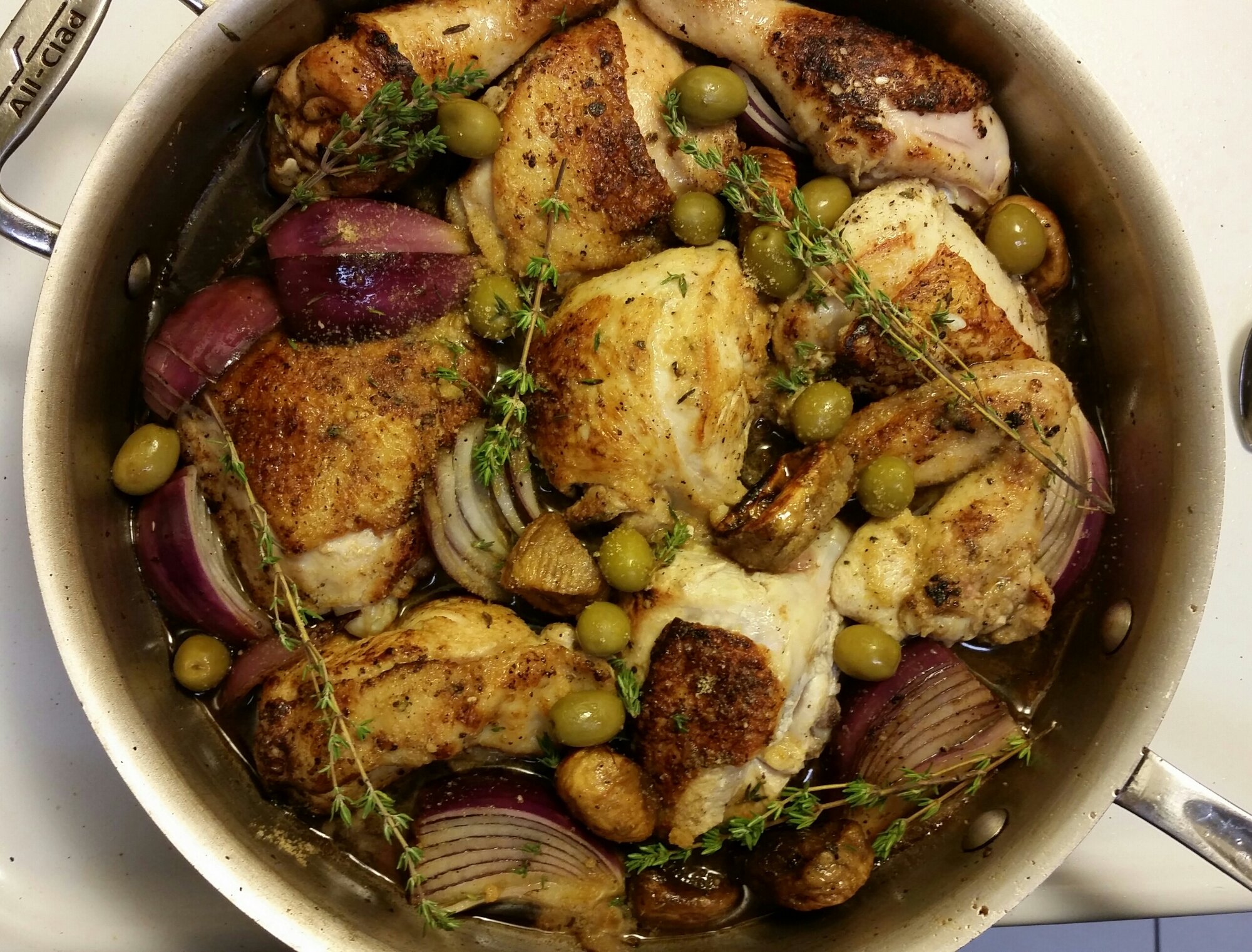
Herb Pan-Roasted Chicken w Mushrooms and Shallots… Roasted Chicken always says comfortable and relaxed and the mushrooms and shallots elevate it from a simple bird to a fine bird to serve to guests. What I like most about pan roasting is that the chicken, cut into pieces, eliminates the awkwardness of carving a chicken at the table. Everyone can serve themselves.

If you are cutting up your own chicken, which is economical and very easy, make sure to reserve the back (or spine) of the chicken and the wing tips. Freeze them in a plastic bag until you have collected a sufficient amount to make chicken stock later. I promise you the chicken stock that you make at home will taste better, have less salt, and will cost you pennies compared to anything you can buy in the store.

The basmati brown rice will go with the entrée…. the carrots and celery will make a nice base for a pilaf… My everyday rice at home is brown rice in as many varieties that I can get it in: basmati, long grain, short grain, jasmine, and medium grain. I love the nutty, wholesome taste of brown rice and I do not understand why it gets such a bad rap from folks.

The Garden offered green beans to devour, so that is the vegetable.

Photo Bin 206

As I look over this dinner, I realize that I am very heavy on the vegetables… but that is not a bad thing because I love them all!

To deglaze the roasting pan and make a little sauce, I will use brandy… you could easily use chicken stock or beef stock if you have it around. I did not. I do have a bag filled with chicken parts just waiting for me to make them into stock – but not today; and not this blog.

Dessert:
If someone is coming to dinner, I have to make a dessert. I just have to… it makes the meal end sweetly. Whether it is a simple dessert – like fresh orange slices with rum caramel sauce and mint – or something very decadent… there will be a dessert. Besides, we do not have dessert at home, unless there is a special occasion. My Sister coming to dinner is special. Mini Chocolate Lava Cakes with fresh Strawberries… and a small scoop of Strawberry Sorbetto, which will leave enough for my slushy later in the week.

My Recipe: GORGONZOLA-PARMIGIANO REGGIANO FRICO CHIPS

1 cup shredded Parmigiano Reggiano, or Romano, or any hard Italian cheese
¼ c Gorgonzola, crumbled
cracked black pepper

My Method:

Preheat oven to 400 degrees.

Working on a Silpat or a non-stick pan that is also oven-safe, make small 2” rounds of the shredded cheese and crumble the blue cheese on top on the rounds

Photo Bin 121

Bake in the oven for 10 – 13 minutes, until the cheese is melted and bubbly in the center and lightly browned and toasted on the edges

Season with cracked black pepper

Allow chips to cool completely on the pan until ready to serve on top of a salad

Chips will harden as they sit, becoming crispy

My Recipe: VEGETARIAN CESAR DRESSING

¼ c mayonnaise
½ lemon, juiced
1 – 2 garlic cloves
1 – 2 T Dijon mustard
1 T shredded Parmigiano Reggiano, or Romano (optional)
kosher salt, to taste
cracked black pepper, to taste

My Method:

Using a mortar and pestle, mash garlic, using a little kosher salt, until a smooth paste forms; scrap into a mixing bowl

Add all of the remaining ingredients to the mixing bowl and thoroughly combine

Taste and adjust seasoning accordingly; chill and reserve for service

Photo Bin 218

My Recipe: HERB PAN-ROASTED CHICKEN w MUSHROOMS and SHALLOTS

1 whole chicken, cut into 8 parts, reserve wings for another time
2 T fresh chopped fresh herbs: rosemary, thyme, chives, sage, parsley
1 pint white button mushrooms, quartered
2 shallots, peeled and quartered
2 T olive oil
1 T salted butter, unsalted is fine
1 T kosher salt
½ T fresh cracked black pepper
1 c brandy, or chicken stock, or beef stock

My Method:

Preheat oven to 375 degrees; heat a large oven-proof skillet over medium high heat

Pat chicken dry and season with fresh herbs, kosher salt, and cracked black pepper; drizzle with olive oil to coat

In hot skillet, sear chicken, skin side down until handsomely browned all over. Do not force chicken up from the pan. If it is still sticking when you try to move it, it is because it is still searing. Once the sear is done, and handsome brown color sets, the chicken will lift easy form the pan to sear the other side

Photo Bin 148

Working in batches, DO NOT CROWD THE PAN; sear the remaining of the chicken and set aside.

When all the chicken is seared, return it to the pan and place the OVEN-PROOF pan in the preheated oven to roast for 25 – 30 minutes.

Remove pan from the oven, remove chicken, cover, and keep warm; skim away all but 3 T of the pan drippings; add mushrooms and shallots and sauté over medium-high heat for about 10 minutes

Photo Bin 214
Photo Bin 215

Add the brandy, if using, to the pan and scrape up all the browned bits on the bottom of the pan; lower heat to medium and reduce liquid by half; turn off heat

Photo Bin 216
Photo Bin 217

Add butter to the pan and swirl to melt and blend with the brandy reduction; taste and adjust seasonings, if necessary

Add chicken back to the pan, and any juices that accumulated while resting and spoon sauce over chicken

Serve with shallots and mushrooms on top of chicken with fresh herbs to garnish

My Recipe: BROWN BASMATI RICE AND VEGETABLE PILAF

2 c brown basmati rice
1 carrot, peeled and diced
1 celery stalk, diced
1 medium onion, peeled and diced
1 garlic clove
1 dried bay leaf
2 T olive oil
1 T kosher salt
1 t cracked black pepper
3 ½ c water

My Method:

Heat a saucepan w a tight-fitted lid over medium-high heat; add olive oil and sauté vegetable and garlic until fragrant and soft; about 10 minutes

Add rice and stir coated with the olive oil and vegetable-garlic mixture; add bay leaf, kosher salt, and cracked black pepper

Photo Bin 133

Add water; bring pot to a full boil

Reduce temperature to medium-low; put lid on pot and cook until all the water is absorbed and the rice is tender; about 35 – 40 minutes

Fluff pilaf with a fork and serve.

My Recipe: QUICK AND EASY AND SIMPLE GREEN BEANS

1 # fresh green beans, washed and trimmed
1 T salted butter, unsalted is fine
1 T olive oil
kosher salt, to taste
cracked black pepper, to taste
water

My Method:

Bring a large pot of water to a boil; add 1 T of kosher salt; add green beans and cook for 5 minutes, until bright green color is set

Drain beans and rinse under cold water; set aside

Over medium-high heat, heat olive oil and butter; when butter melts, add well-drained green beans and sauté until beans start to wilt and brown a bit

Season with kosher salt and cracked black pepper to taste

Photo Bin 221

My Recipe: MINI CHOCLATE LAVA CAKES makes 4

1 stick of salted butter*
½ c chopped really good dark chocolate, spend the money for the best kind
½ c all-purpose flour
1 ½ c confectioner’s sugar, plus more for sprinkling over the top or cakes
3 whole eggs
3 egg yolks
2 t pure vanilla extract
1 t espresso powder, optional
heavy whipping cream, to garnish
strawberry sorbetto, to garnish
fresh strawberries, to garnish
cooking spray
granulated sugar

My Method:

Preheat oven to 400 degrees

Spray four ½ c ramekins with cooking spray; dust each lightly with granulated sugar; set aside

In a sauce pan, melt butter; add chocolate; stir until chocolate is melted and everything is well combined

In a mixing bowl, combine confectioner’s sugar, all-purpose flour, eggs, vanilla extract, and espresso powder, if using; whisk until very smooth; add chocolate mixture and thoroughly combine

Photo Bin 207Photo Bin 208Photo Bin 210

Divide batter between all the four prepared ramekins; set ramekins on a cookie sheet and bake for 13 to 15 minutes, until the tops are dry and dull

Photo Bin 211

Allow cakes to rest in the ramekins for about 6 – 7 minutes before taking them out to serve; the cakes should be served warm and the inside will be like a thick, soft-set warm chocolate pudding… like molten lava… hence the name.

Whip the heavy whipping cream with a little Confectioner’s sugar and Valhorna cocoa powder, set aside

To serve, invert the cakes onto a plate and garnish with a dusting of confectioner’s sugar; serve on the plate with the a fanned strawberry, chocolate whipped cream, and a small scoop of strawberry sorbetto.

Photo Bin 222

*NOTE: If you are using unsalted butter for this recipe, add ¼ t to the recipe at the melted butter stage. It might seem odd; but, if you leave out the salt, the finished cakes will taste very flat and dull.

always in good T.A.S.T.E – cause you gottatastethis!

Garden Grazing: Summer Edition – Pt I

•August 3, 2009 • 4 Comments

Chefs want their own garden. This is a fact!

Fried Okra w Chili and Lime 002

There is a rewarding feeling to knowing that you planted a seed; nurtured a seedling; watered the plant; shaded it from too much sun; watched the flower bloom; and saw the vegetable or fruit or herb grow. Then, at its peak, you harvest your bounty, cook it, and devour it.

Fried Okra w Chili and Lime 004Fried Okra w Chili and Lime 001

    With all the reasons to own a home, one of the biggest factors that lured me away from apartment dwelling was when SFW said to me: “You can plant a bigger garden.” Aww, my soft spot, I was hooked! Let’s start house hunting!

    So this summer morning, I walked into my garden to find that my lovely clemson okra was ready for the harvest. My heart sank and I let out a small breath excitement just before I willed my sharp knife, cut the succulent vegetable from the plant, and placed in my basket.

    Fried Okra w Chili and Lime 005

    An with the enitre day to myself, I had already begun thinking that this bounty of okra was going to my guilty pleasure lunch today.

    My Recipe: FRIED OKRA w CHILI AND LIME

    2 # fresh whole okra
    ½ c fine corn meal
    ½ c all-purpose flour
    1 T kosher salt
    1 t fresh cracked black pepper
    1 t red pepper flakes
    ½ t ground cayenne pepper
    ¼ t ground cumin, optional
    1 lime
    hot sauce or chili paste (like Sambal Oelek), for dipping, optional
    vegetable oil, for frying

    My Method:

    Wash the okra BEFORE cutting it, this will control the slimy “goo” that cut okra is prone to

    After washing the okra, pat dry with a kitchen towel, and cut into 1” pieces; set aside

    In a medium mixing bowl, combine the corn meal, flour, kosher salt, fresh cracked black pepper, red pepper flakes, ground cayenne pepper, and cumin, if using

    Fried Okra w Chili and Lime 006

    Heat vegetable oil in a heavy bottom frying pan over medium-high heat

    While vegetable oil is heating, cut lime in half and squeeze juice of one half over the cut okra; lightly toss to coat the okra, not too much – remember slimy “goo” control

    Working in batches DO NOT CROWD THE PAN, toss some of the lime-marinated okra into the cornmeal breading mixture; shake off excess breading; and fry okra in hot vegetable oil until golden brown; drain golden fried okra on waiting paper towel; sprinkle with additional kosher salt if desired

    Fried Okra w Chili and Lime 007Fried Okra w Chili and Lime 009

    Dredge, shake off excess, fry, drain, season, and repeat until all of the okra is cooked

    While okra is still hot and crispy, squeeze additional lime juice on top and serve with your favorite hot sauce and a nice cool beverage

    Fried Okra w Chili and Lime 012

    Just in case you are wondering…. Yes, I proudly devoured the entire batch for lunch! It cannot be that bad for me – okra is a vegetable, high in fiber and vitamins B9 and C; contains a nice amount of magnesium, calcium, and protein; and it has no fat – it’s nutritious and delicious!

    always in good T.A.S.T.E – cause you gottatastethis!